
- Genetz, Emil: I, i, illalla
- (I, i, in the evening)
- 12,00 €
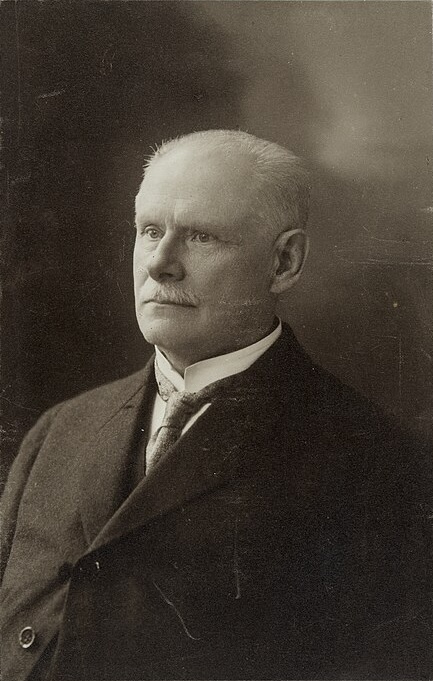
Genetz, Emil
Karl Emil Moritz Genetz (October 24, 1852 Impilahti, Karelia – May 1, 1930 Helsinki) was a Finnish composer.
After graduating from the “Lyceum in Helsingfors” secondary school in 1870, Genetz began studying chemistry and law at the University of Helsinki. He continued the violin studies he had started at an early age but was forced to abandon them due to problems with his right hand. His dream of a musical career led him to become a singer with Kaarlo Bergbom’s Finnish Opera; the success he achieved in several bass roles encouraged him to give up his university studies for good. Genetz was awarded a state grant for advanced studies in singing, music theory, and the performing arts in Dresden, Germany. However, his studies at the local conservatory were cut short after just a couple of years due to unspecified neurological symptoms.
Upon returning to Finland and working for a few years as a railway official, Genetz – thanks to his excellent language skills – secured a position teaching German, French, and Russian at the Finnish Normal Lyceum in Hämeenlinna. Among the school’s students at the time was Jean Sibelius, who played actively in the lyceum’s newly established string orchestra. From the Helsinki Normal Lyceum, Genetz moved on to become a German language lecturer at the Hamina Cadet School and also helped found institutions such as the Finnish Co-educational School (*Suomalainen Yhteiskoulu*). Although Genetz was unable to devote himself entirely to an artistic career, he could not tear himself away from music; alongside his teaching work, he also conducted mixed, male, and female choirs. Composition, however, became his most important and enduring life’s work.
Emil Genetz’s choral output ranks among the most important of the pre-Sibelian era – surpassing even that of Fredrik Pacius. Among the composers of this pivotal period in Finnish music history, Genetz remains a visible and audible presence in choral repertoires. His spontaneous temperament and sense of drama, his sophisticated and assured command of voice leading, and his rich harmonic imagination helped pave the way for the Expressionism of the early 20th century. Both his contemporaries and subsequent generations of composers drew inspiration from the power of Genetz’s musical expression.
Works
Title of the work (Translation) Price
Duration Division of parts Year of composing
Poet/collection Language Style
Duration Division of parts Year of composing
Poet/collection Language Style
SA choirs
SATB choirs
TB choirs
- Genetz, Emil: Karjala
- (Karelia)
- 36,00 €
6`
30``
TTBB-div
1892
Jännes, Arvi (Genetz, Arvid)
Finnish
Classical
- Genetz, Emil: Karjalan vahti
- (Guardian of Karelia)
- 9,00 €
3`
15``
Bar
1918
Voipio, Viljo
Finnish
Classical
- Genetz, Emil: Kehtolaulu
- (Lullaby)
- 20,00 €
3`
15``
TTBB-div
1909
Wuorinen Olli (Berg, Olof)
Finnish
Classical, Traditional
- Genetz, Emil: Lemmenkukka
- (Love flower)
- 14,00 €
1`
45``
TTBB-div
1881
Folk poem (Finland)
Finnish
Classical, Traditional
- Genetz, Emil: Lippumarssi
- (Flag march)
- 15,00 €
2`
00``
TTBB
1918
Lahdensuu, Essi
Finnish
Classical
- Genetz, Emil: Metsänhartaus
- (Forest devotion)
- 11,00 €
1`
45``
TTBB
1876
Hannikainen, Pekka Juhani
Finnish
Classical
- Genetz, Emil: Mieslaulu
- (Male song)
- 6,00 €
1`
30``
TTBB
1900
Erkko, Juhana Heikki
Finnish
Classical
- Genetz, Emil: Miniatyyri – Missä kukka, siellä kesä
- (Miniature – Where there’s a flower, there’s summer)
- 7,00 €
1`
00``
TTBB-div
1915
Erkko, Juhana Heikki
Finnish
Classical
- Genetz, Emil: Suomen valta
- (Finland's power)
- 5,00 €
1`
30``
TTBB
1915
Oksanen, August
Finnish
Classical
- Genetz, Emil: Suruisena
- (In sadness)
- 19,00 €
2`
45``
TTBB-div
1888
Hannikainen, Pekka Juhani
Finnish
Classical
- Genetz, Emil: Viihdytys
- (Entertainment)
- 11,00 €